That’s not Language
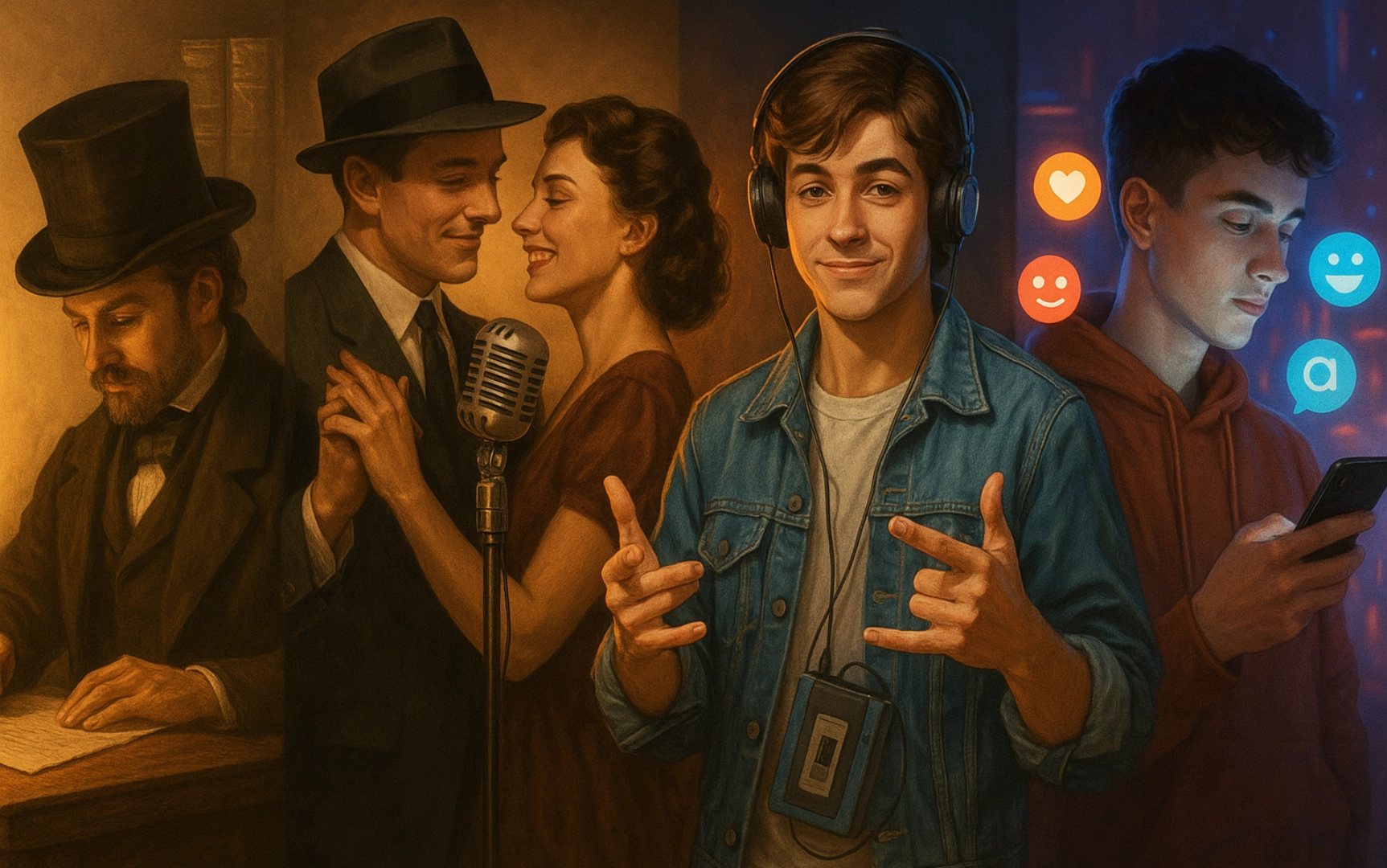
The fascinating cultural shift of lexicon and communication patterns through generations have led us to this.
Growing Up Multilingual (But Not How You Think)
I grew up in the ’90s—a time when the internet made that dial-up noise, you had to blow on your game cartridge to make it work, and your phone couldn’t do much more than call, text, and maybe play Snake.
Raised by Baby Boomer parents, with Gen X uncles and aunties constantly dropping words like “chill,” “dope,” and “gnarly,” while my Millennial peers were inventing “YOLO,” “Netflix and chill,” and “FOMO,” I learned quickly that language wasn’t just about communication—it was about belonging.
We carried a double lexicon: the lingo of the past and the slang of the now. Our speech was a hybrid—half respect for what came before, half rebellion via what was trending on MySpace or MSN Messenger.
Before It Was “Dope,” It Was “Dapper”
But if we’re talking language—real language—we’ve got to go back. Way back.
Back to when Shakespeare turned emotion into poetry and invented phrases like “wild-goose chase,” “wear your heart on your sleeve,” and “break the ice.” The man practically gifted the English language half its modern idioms.
Then came the Victorian era—decorum, elegance, and wit in every turn of phrase. Communication was a craft, and words carried the weight of intention. A simple “I remain yours faithfully” was as potent as any love emoji today.
My grandparents lived through a time where this old-world elegance was still echoed. Their playlists? Frank Sinatra, Nat King Cole, Ella Fitzgerald. Lyrics were smooth, metaphoric, and artful. Men were “swoon-worthy,” women “ravishing,” and conversations were less “what’s the vibe?” and more “shall we dance?”
They didn’t text—they wrote letters. And when they spoke, you listened. Not just to what they said, but how they said it.
SMH: How Did We Get Here?
Fast-forward to now, and Gen Z has taken the reins of digital language. They’re not just texting—they’re coding culture in real-time. “Ate,” “no crumbs,” “it’s giving…”, “simp,” and “finna” aren’t just words; they’re emotional cues, status signals, and social filters.
Language has become faster, more visual, and more fluid than ever. Emojis, memes, TikTok sounds, and reaction GIFs say more than entire paragraphs. Communication has evolved into something unrecognizable to our grandparents—and sometimes, to us.
But if I’m being real? As fascinating as it is, part of me misses the depth. The poetry. The artistry. The Sinatra-style croon behind every sentence. The irony and dry wit of Gen X. The full sentences.
Progress or Regression?
Yes, it’s progress. Gen Z and Alpha have democratized language. Slang spreads globally in seconds. Trends aren’t set by magazines—they’re born in Discord servers and die in Instagram comments.
But is something being lost? The elegance? The restraint? The romance of well-formed thought?
Maybe it’s not a regression—it’s just different. Maybe it’s us who have to adjust, learn the dialects of new generations, and appreciate how “vibe check” can mean as much as a handwritten letter sealed with wax did in another era.
Word.
We don’t all speak the same language, even if it’s technically English. Each generation codes their experiences into speech, slang, and syntax. And maybe understanding that is the first step to really hearing each other.
Until then, I’ll be here—somewhere between “I thee wed,” “fly me to the moon,” and “I’m dead 💀.”
This article was written by Ken Paul, with the assistance of AI-based drafting tools used for structural and editorial refinement. All ideas, arguments and conclusions remain solely his own.